


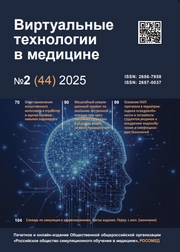
The scientific and practical journal on virtual and simulation technologies in medical education and clinical practice – the only Russian-language journal in the world specializing in this field-was established in 2008.
This peer-reviewed medical journal is published quarterly by the all-Russian public organization "Russian Society for Simulation Education in Medicine", ROSOMED.
The main topics discussed in this publication are: principles, classification, didactic features of simulation methods in health care education, their assessment, testing, examinations, and OSCE during primary and primary specialized accreditation; problems of distance and virtual learning; development of the concept, design, equipment, and management of simulation and accreditation training centers; the use of simulation techniques in testing of medical equipment and pharmaceuticals, hospital logistics, clinical protocols and other clinical processes; in recruiting and periodic certification of personnel. Applied issues of creating, validating and implementing phantoms, dummies, patient simulators, and virtual simulators are widely covered in the publication as well.
The journal publishes theses of international ROSOMED Congress and regional events devoted to the issues of simulation education in medicine.
Current issue
ТЕЗИСЫ
The experience of conducting training on emergency care for anaphylactic shock for medical institutions in Perm on the basis of the federal accreditation center.
The article provides an example of teaching students the skills of scientific and medical research in the educational process of anesthesiology and intensive care. The experience of introducing elements of students' research work is shown by the example of the study of factors that accelerate the postoperative readaptation of patients during outpatient operations (phlebectomy, hernioplasty).
The purpose of the study was to evaluate the impact of the interactive Tutorman learning system on the quality of performing the peripheral venous catheter insertion procedure among students of the Vocational School. In a quasi-experiment (n=30), interactive and traditional learning were compared. The quality of performance, time, and skill retention were evaluated. It has been established that the use of the system helps to reduce the number of errors, reduce execution time and more stable skill formation compared to traditional training.
Due to the high risk of carotid endarterectomy (CE) and the narrowing of the "learning field" due to the shift of operations towards endovascular surgery, an algorithm for step-by-step training of neurosurgeons has been developed, including theoretical, technical and non-technical blocks. The implementation of specialized courses in leading Russian centers has made it possible to increase operational activity in the regions, however, in order to overcome the lack of competencies among residents, it is necessary to expand the vascular module and create postgraduate courses (cadaver courses, fellowships).
The present work examines the actual problem of surgical correction of spinal deformities as one of the key areas of modern vertebrology. It is emphasized that the high complexity of surgical interventions is associated with the risk of serious complications, which necessitates in-depth training of specialists. The training of neurosurgeons in modern approaches and methods of spine surgery is aimed at improving the effectiveness of treatment and reducing the frequency of postoperative complications.
This work pays tribute to the integration of distance technologies in the training of clinical skills for medical students specializing in therapeutic disciplines. It explores the use of various distance learning formats, such as video tutorials, webinars, virtual simulations, and online testing, and their impact on the quality of training for future specialists. We examine existing programs, teaching methods, and assessment tools based on student and faculty surveys.
The paper presents the results of the development of a simulation center with the introduction of advanced digital and management technologies based on the analysis of new official documents in the field of medical education. The paper describes approaches to management, accreditation, and communication training, as well as the improvement of the educational environment through the use of artificial intelligence and remote platforms. The paper demonstrates innovative solutions for training modern healthcare professionals.
Simulation training is an important tool for preparing healthcare professionals to perform cardiopulmonary resuscitation. This paper examines the role of simulation technologies in mastering the AHA 2025 recommendations. It analyzes literature data and evaluates the impact of training on the quality of CPR performance, decision-making speed, and adherence to algorithms. The paper demonstrates that simulation training enhances the effectiveness of resuscitation measures and improves clinical outcomes.
The article presents the experience of mastering reconstructive surgery of extracranial arteries on the basis of the neurosurgical department. It is based on consistent training from the fundamental theoretical foundations to the completion of simulation courses and internships. This allowed operations to be performed first with the involvement of a vascular surgeon, and then independently. At the heart of the development of carotid artery reconstructive surgery by neurosurgeons, it is important to form a basic theory and practice.
The issue of training neurosurgical personnel is an urgent problem. This article presents the main problems and factors negatively affecting the training of neurosurgeons. Possible solutions to the problems of training neurosurgeons are presented.
The formation of manual skills among students in medical schools is one of the priorities of practical training. In the second year, when mastering the discipline of Nursing, students use two main sources of theoretical and practical training: a textbook, a virtual interactive platform. During practical training and for independent training after classes, they use phantoms and dummies, so the question arises: which of these methods or a combination of them contributes more to the development of manual skills, understanding the algorithm and forming muscle memory.
Improving team and communication skills is a prerequisite for providing high-quality medical care. The assessment of communicative competencies after a simulation training on neonatal resuscitation using an anonymous questionnaire was carried out. Subjective satisfaction with learning, psychological safety, the need for regular training, communication and leadership components in teamwork have been identified. The data obtained substantiate the need to develop communication skills in simulation scenarios.
The development of peripheral nervous system surgery is accompanied by the introduction of new technologies, changing approaches to reconstructive interventions and improving rehabilitation methods. The analysis of modern scientific data has made it possible to identify key areas of development in this field and justify the need for their integration into educational programs for the training of neurosurgeons and related specialists.
This paper raises the issue of the need to include in the list of practical skills the primary and primary specialized accreditation of the station "Emergency Medical Care" for dental specialties of the specialty and residency, as well as the introduction of an appropriate simulation course into the training program.
Working in the intensive care unit (ICU) is associated with extreme conditions, high stress levels in patients, and fear of pain and death. This creates the ground for destructive behavior ("difficult patients"), which makes treatment more difficult and increases the risk of conflict.
There are no strict recommendations on the arrangement of furniture at an outpatient appointment. Therefore, the idea arose to study this issue in order to use scientifically based recommendations on the optimal spatial organization of the doctor's workplace (the relative location of the table, the doctor's chair and the patient's chair) to improve the quality of medical communication. During the formative exams, as well as during the primary and primary specialized accreditation, it was suggested that chairs and a table should be placed in a way that would be comfortable for them to start admission.
Performing intraosseous access in emergency care algorithms requires a revision of traditional approaches to training doctors at the stages of medical evacuation. The necessity of simulation training is substantiated, the method of step-by-step mastering of the skill using anatomical models and semi-automatic devices is described, and comparative data on the speed of manipulation before and after the practical course is presented.
Communication of medical professionals with parents of children in the first year of life is one of the key factors. A family-oriented approach helps to increase commitment to the implementation of medical recommendations, the formation of child care skills and the timely identification of risk factors for health disorders. The analysis made it possible to identify the main areas of communication between medical professionals and their families and to assess the importance of clinical and social factors influencing the effectiveness of family-oriented support for children in the first year of life.
The study evaluated the effectiveness of simulation training in shoulder dystocia. 80 residents participated in the program; their skills were measured using the OSATS, NOTECHS and NASA TLX scales. The trainings included practicing practical techniques, role-playing games, debriefing, and gamification elements. The results showed a 40% reduction in decision-making time, a 65% reduction in technical errors, and a 92% increase in learning satisfaction. Simulations increase the safety of obstetric care due to the development of algorithms and teamwork.
The paper is devoted to assessing the role of simulation training in improving the skill of fetal vacuum extraction surgery. The purpose of the work is to evaluate the impact of simulation training on the formation of practical competencies in this operation. An analysis of the training of 14 obstetricians and gynecologists who completed an 8-hour course on "5O" technology using simulation technologies was carried out. The results showed the progress of knowledge and practical skills of the participants. The authors conclude that it is necessary to expand the sample for further in-depth analysis.
A decrease in student motivation is an extremely common problem all over the world. In this paper, we consider how the use of artificial intelligence (AI) can affect motivation and the learning process. The purpose of the study is to demonstrate the effectiveness of using interactive AI tools (HTML simulators, SCORM courses) to increase the engagement of target audiences. Based on the educational programs of the Amur State Medical Academy of the Russian Ministry of Health, we have tested an approach in which we used generative AI to complicate clinical tasks and create interactive training stands.
Simulation training is a key element of personnel training in neonatology, however, the stress that participants experience can affect the effectiveness of skill acquisition. The results obtained substantiate the need to integrate psychological support methods into simulation training programs.
Despite the improvement of the regulatory framework, cases of late diagnosis of critical congenital heart defects (CHD) continue to be registered in clinical practice, which indicates the presence of educational deficits that are not predicted by the traditional design of simulation programs. An approach to continuous learning improvement is presented, in which a critical clinical incident is used as a source of identifying deficiencies and updating the content.
Objective: to evaluate the effectiveness of communication cases of the Rumedius virtual clinic for teaching outpatient admission according to the Calgary-Cambridge model. Materials and methods. A prospective comparative study (n=130). The main group is training at Rumedius, the control group is with a standardized patient (SP). Assessment of knowledge (tests), skills (situational tasks) and skills (demonstration). Results. The final indicators of communicative competence are comparable (p>0.05). Conclusions. "Rumedius" forms basic communication skills comparable to the traditional method when there is a shortage of a joint venture and a coach.
The shortage of emergency medical doctors dictates the need to expand the competencies of paramedics. The effectiveness of a 4-hour simulation training in emergency obstetrics was evaluated. For the first time, 72 paramedics practiced exercises on simulators. The paired analysis (97.2% coverage thanks to fuzzy matching) showed an increase in correct answers from 48% to 89% (p<0.001). MacRoberts' reception skills improved from 37% to 96%. The high efficiency of the simulation method has been proven to improve the safety of childbirth outside the Ministry of Health.
Childbirth outside a medical organization requires precise execution of NRP algorithms. The effectiveness of a 4-hour simulation training for 72 paramedics, who practiced their skills on dummies for the first time under the guidance of experts from the I. Kant BFU Simulation Center, was evaluated. The paired analysis (97.2% coverage thanks to fuzzy matching) revealed an increase in knowledge from 48% to 89% (p<0.001). The technique of heart massage (3:1) improved from 30% to 98%, thermoregulation of premature babies — from 28% to 91%. The high economic and clinical effectiveness of expert training for reducing neonatal mortality in the region has been proven.
The authors share their experience of using a simulation approach in the training of residents in the specialty "emergency medicine" using the example of the protocol of extended cardiopulmonary resuscitation. This educational module is not supported by the need to demonstrate a skill within the framework of primary specialized accreditation, which creates difficulties in forming motivation for the educational process.
The ten year experience of the development of the Federal Accreditation Center of Bashkir State Medical University is presented, from the practical training unit to the level III center. The stages of the formation of a simulation educational environment are reflected, including the training of students, residents and specialists, the conduct of primary and primary specialized accreditation, scientific, methodological and educational activities. The scope of work and key principles of the simulation learning model are presented.
The results of the III International Scientific and Practical Conference "Simulation technologies of education in healthcare", held on November 21, 2025 on the basis of the Federal Accreditation Center of Bashkir State Medical University, are presented. The structure and content of the scientific and educational program, the geography of participants, thematic areas and formats of work are analyzed. The interdisciplinary nature of the event, the integration of simulation training and accreditation, the development of digital technologies and artificial intelligence are shown.
A survey of 206 6th-year students of the Pediatric Faculty of Bashkir State Medical University was conducted to assess their subjective readiness for professional medical communication. A high overall self-assessment of readiness with less confidence in difficult communicative situations was revealed. The greatest difficulties are associated with communicating unfavorable information and interacting with anxious and conflicted patients. The need to expand practice-oriented training has been identified.
The thesis presents the preliminary results of the introduction of an original methodology for teaching nursing staff communication skills using author's mnemonic speech forms (GOST, BUG, FOP, PIR, ROW, etc.). The training is conducted on the basis of N. N. Blokhin National Research Medical Center of Oncology in the format of mixed groups (senior and ordinary nurses). The experience of conducting 30 trainings (covering about 200 people) has demonstrated that concise mnemonic forms significantly increase the survival rate of skills in real clinical practice and form a unified supportive environment within the nursing team.
For embryologists, as non-medical specialists, the OSCE basic CPR station causes a high level of situational anxiety and fear. The Kulakov National Research Medical Center of the Ministry of Health of the Russian Federation has introduced a course on basic CPR, adapted for specialists with non-medical education in order to eliminate psychological barriers and ensure successful passage of the OSCE station "Basic Cardiopulmonary Resuscitation of adults and maintenance of airway patency" and evaluated its effectiveness.
An analysis of the literature and the introduction of the game "Gynecology" has been carried out to identify the advantages and disadvantages of gamification in medical education. After testing the game on the "Obstetrics and Gynecology" cycle, 70 students were interviewed. The advantages of using game solutions include increased engagement, easier perception of complex topics and the development of team interaction; limitations include uneven engagement, lack of time, organizational and technical difficulties, and uncertainty about the evidence of the impact of games on learning.
A retrospective analysis of the tutoring program of Karaganda Medical University for 2017-2026 was carried out. Her contribution to the professional development of students was assessed on the basis of quantitative performance indicators and the analysis of alumni reviews. During the study period, more than 4,500 students participated in the program, expanded training areas and introduced modern educational technologies. The results show that tutoring contributes to the development of clinical, pedagogical, leadership and research competencies, forming the professional identity of future doctors.
The effectiveness of the simulation course "Emergency medical care for children" among 5th-year students of the specialty "Pediatrics" was evaluated. The analysis of the results of the group clinical examination, the questionnaire and the final state certification showed a high level of formation of practical competencies, positive dynamics of self-assessment of training and high satisfaction with training. The results obtained confirm the effectiveness of simulation training and the need for its further expansion in the educational process.
The development of manual skills is one of the key stages in training surgical specialists. The use of simulation technologies makes it possible to safely practice practical skills without risking the patient. The development and implementation of a reusable simulator for palpation and puncture of soft tissue formations under ultrasound guidance helps to improve the practical training of students and to develop skills in visualization and puncture diagnostics.
Mastering the skills of desmurgy is a mandatory stage in the training of medical specialists. Studying various types of bandages using drawings, diagrams, and video materials does not always allow for the development of stable practical skills. It does not provide a complete understanding of the technique for applying them. The development and implementation of frame‑based bandage models make it possible to enhance the clarity of the learning process. They provide visualization of each stage of bandage application. This improves the quality of students’ acquisition of practical skills.
The impact of pedagogical facilitation on the effectiveness of VR training for 5th-year students of the specialty "Pediatrics" in mastering emergency care skills has been assessed. A comparative analysis of the results of the clinical scenario, Likert scale data and statistical processing showed that pedagogical support significantly improves the quality of algorithms, reduces cognitive load and stress, and also contributes to the formation of stable clinical thinking and confidence of students.
The analysis of international experience in the use of simulation technologies for the formation of ophthalmoscopy skills among students of medical universities is carried out. The possibilities of modern Eyesi Direct, Eyesi Indirect and Ophthalmic simulators are considered, which ensure the safe development of diagnostic techniques, an objective assessment of practical skills and the development of clinical thinking. International studies confirm that the use of simulation training improves the quality of training, students' confidence and the effectiveness of mastering ophthalmoscopy.
The educational module of the Unified Medical Intelligence of Russia platform, an AI simulator of clinical thinking of medical students, is presented. Unlike static simulators, the system generates unique clinical cases based on 64 clinical recommendations from the Ministry of Health through RAG + YandexGPT. 4 levels of difficulty have been implemented, including comorbidity (a combination of 2-3 diseases), and a Live Reception dialog mode for collecting medical history. Automatic verification of responses with error analysis. The accuracy of the diagnosis is 94%, the response time is 3-5 seconds. Rospatent certificates have been received, and the project is supported by Sechenov University and the Russian Ministry of Emergency Situations.
This paper presents an analysis of the effectiveness of various approaches in first aid training.
The adoption of federal state educational standards for higher education has set the task of developing universal competencies, the so‑called “soft skills,” including communication skills. Research results confirm that it is precisely the presence of such skills that ensures the acquisition of “hard” skills, makes it possible to adapt work activities to changing real‑world conditions, and enables one to bear adequate professional responsibility for decision‑making.
The authors analyze various approaches to creating scenarios of contextual tasks for practicing emergency medical care skills in polytrauma at the prehospital stage. Based on the experience of the author's team, tasks involving almost one conditional victim are reasonable, both in terms of training and in assessing the level of proficiency.
The paper presents a comprehensive methodology for training specialists in primary medical care in handling emergency situations involving the risk of occupational exposure to HIV/HBV/HCV. The structure of a comprehensive session that integrates an initial assessment, a theoretical component, and a highly realistic case‑based training is examined. Special attention is paid to debriefing as a tool for analyzing critical errors and consolidating stable clinical competencies.
In this study, we have established that communicative competence includes interrelated personal components: competencies, motivational and value‑based attitudes, through which the perception of the subject of communication (the patient) takes place. Thus, in particular, a relationship has been identified between social trust, benevolence, and the conditions of communication and interaction skills. At the same time, training using the “simulated patient” method does not affect the value‑based attitudes of the trainees, but it may change the perception of the subject of communication (the patient) and make it less difficult for the doctor.
The operation of the emergency department under high workload conditions requires effective coordination of clinical, organizational, and communication processes. The aim of the study is to evaluate the capabilities of the multi‑threaded simulation “Chaos Hospital Management” for developing leadership, communication, teamwork, situational awareness, decision‑making, and resource management. The study involved 55 healthcare workers distributed across five interdisciplinary teams. After debriefing and training, the overall criterion compliance rate increased from 58% to 90–92%.
The experience of implementing a comprehensive methodology, which includes targeted language support and additional simulation training, in the education of first‑year international students studying in Russian in the subject “First Aid” at the simulation and certification centre of the Belarusian State Medical University is presented. A comparative analysis of the effectiveness of the training showed that the use of the comprehensive methodology increased the chances of successful assessment in the subject by 6.4 times (p=0.002) and doubled the chances of receiving a higher grade (p=0.09).
The virtual patient simulator “MedExam,” which is a computer program simulating a patient on the screen of a tablet computer desk, was used for the final assessment of intern doctors in the specialties “Therapy” and “General Medical Practice.” The simulator has high ecological validity and fully reproduces the professional actions of a doctor, including taking complaints and medical history, conducting an examination, assessing all organs and systems, prescribing and obtaining the results of laboratory and instrumental tests, making a diagnosis, and prescribing treatment.
The paper presents the results of training for first‑year residents specializing in anesthesiology and intensive care medicine. It demonstrates the variety of disciplines in which simulation‑based training is used and its outcomes.
This paper defines conceptual approaches to the development of a professional training system for the specialty of “algology” — a branch of medicine focused on the treatment of chronic pain syndrome as a socially significant pathology. Based on an analysis of existing international educational models (North American and European), priority vectors for training specialists in this field have been identified. A list of basic theoretical knowledge and clinical skills required of an algolist has been systematized, with an emphasis on the interdisciplinary nature of the competencies. In light of the existing organizational and methodological problems in training personnel in algology in the Russian Federation, directions for overcoming them have been proposed.
The paper presents the experience of developing and implementing a modular training program for mentors in the healthcare system of the Moscow Region, which is being implemented within the framework of the state Concept for the Development of Mentoring in the Russian Federation until 2030.
The authors share their experience in creating a simulation platform in the format of a festival to improve the skills of first aid instructors. The article reveals the specifics of the organization of the event, the selection and formation of scenarios for adaptation tasks, the relevance and effectiveness of the format based on surveys of participants.
The article presents the results of students’ assessment in the discipline “Medical Care and Manipulative Techniques” and analyzes the most common mistakes made during injection procedures.
The introduction of the communication module into the training of pediatricians is due to the gap between declarative knowledge of medical communication and practical skills in its implementation, which is confirmed by a pilot project at the Faculty of Medicine of Ulyanovsk State University. The purpose of the study was to assess the initial level of communicative competence of pediatric students before beginning the development of the discipline "Professional elective. Communication skills" using anonymous screening testing.
The paper presents the results of an anonymous survey of 50 students of the Medical Faculty of Ulyanovsk State University who evaluated the work of the Simulation Center for Medical Modeling according to 10 criteria using a 5-point Likert scale. A high level of overall satisfaction was established (4.68 points). The strengths of the center are revealed — modern equipment and competence of the staff, as well as problem areas — lack of study time and inflexibility of the schedule. The data obtained substantiate the need to increase hours and introduce evening sessions for independent work.
he work of outpatient clinics in the public health system is mainly associated with the provision of routine medical care. Doctors and nurses do not have a dominant interest in providing emergency medical care, understanding the algorithm of actions, and teamwork skills, which is due to the rarity of the development and course of life-threatening pathology within the walls of a polyclinic in comparison, for example, with the intensive care unit or the ambulance team.
The experience of optimizing the training of subordinates in minimally invasive surgery on the basis of Vitebsk State Medical University is presented. The traditional sequence (from boxed simulators to LapSim) has disadvantages: abstraction of exercises, lack of feedback, decreased motivation. In the experimental group, the training began with a virtual training session on LapSim, followed by a transition to boxes, a return to LapSim, and a final on dummies. The results showed better motor skills and engagement. A four-stage model is proposed: virtual basic → real basic → virtual operational → real complex.
The paper presents the results of a comparative evaluation of the effectiveness of using a 3D-printed video laryngoscope with Wi-Fi image transmission and a traditional Macintosh laryngoscope in the training of tracheal intubation residents. It is established that the proposed device is not inferior to the classical instrument in terms of basic technical indicators, and in a number of aspects surpasses it due to video recording and remote control capabilities. It is concluded that the use of such equipment in simulation centers can improve the quality of specialist training and reduce equipment costs.
The paper considers the prospects of using artificial neural networks in teaching obstetrics and gynecology: the creation of simulation models of patients and the use of AI assistants. The main difficulties are analyzed: the risk of generating clinically unsafe recommendations, insufficient AI literacy of teachers and the lack of a regulatory framework. The necessity of integrating artificial neural networks as an additional tool for practice-oriented learning is substantiated.
The paper provides a comparative analysis of the effectiveness of simulation training in ultrasound examination using the FAST protocol using various types of simulators. Based on objective checklists and subjective questionnaires, the skills of sensor positioning, visualization, and identification of anatomical structures among the training participants were evaluated. The advantage of new portable simulation solutions in terms of objective success and student satisfaction is revealed.
he Russian VR platform VRM CLab for training specialists in X-ray endovascular surgery is presented. The system simulates the stages of coronary interventions, allows you to repeatedly work out the algorithms of actions, records the time of passage, errors and the correctness of their elimination, and also provides the teacher with observation and subsequent analysis of the result. The model of VRM CLab implementation in the education of students and residents is considered.
The development of medical education requires a digital transformation of the management of simulation centers. The increasing technological complexity of equipment and the scale of training necessitates the introduction of artificial intelligence (AI) to optimize organizational and methodological processes.
The article presents an analysis of the effectiveness of the innovative methodological technique "Simulation Clip" and low-Fidelity simulation equipment (Low-Fidelity simulators), which serve as a means of improving the quality of mastering practical skills in teaching 2nd-year students in the academic discipline "Medical care and manipulation techniques". Using simple simulators and methodical techniques in the classroom allows you to develop the skills of performing basic manipulations in a comfortable, accessible and safe environment.
The authors consider the urgent problem of introducing information technology into simulation training, which makes it possible for students of the pediatric faculty to safely master primary skills at the preclinical stage. The use of the digital application "Nutrition calculation simulator for children of the first year of life" developed by the authors allows them to practice the skills of calculating nutrition and menu preparation in the learning mode and evaluate them in the exam mode with an assessment. The developed application can be useful not only for students, but also for practicing doctors.
The article presents an analysis of the impact of exam stress on cognitive and emotional processes in medical students. The paper suggests practical support strategies, including approaches to interacting with students depending on the type of their stress response ("freeze", "hit", "run"). It is emphasized that a teacher with soft skills becomes a psychological assistant, not just an examiner, which contributes to the formation of stress tolerance in future doctors.
The work is devoted to the study of the effectiveness of a training course for students of 4-5 courses of medical universities, based on the use of the "standardized patient" methodology, the "Polyclinika" training computer program, to work out the algorithm of actions of a polyclinic doctor when consulting an outpatient patient. The effectiveness in terms of mastering the techniques of communicative interaction, working with electronic medical documentation and compliance with the regulatory time frame during consultation is shown.
The structural and semantic features of the terminology of simulation training in medicine are considered on the basis of 150 terms of the industry dictionary. The methods of structural and component analysis have established the predominance of polylexemic terms, high lexical variability (word-formation variants, synonymy, competing borrowings), interdisciplinarity of the terminological system and replenishment with neologisms related to digital technologies (industrial, metaverse). The results are significant for the unification of terminology, the development of methodological materials, and the training of instructors at simulation centers.
The potential of simulation training in the development of emotional and communicative stability of medical college students is substantiated. According to the results of the survey of 77 students, difficulties of emotional regulation and a request for practice-oriented training were revealed. It is shown that simulation can be used not only to practice technical skills, but also to simulate tense communicative situations.
The experience of developing and testing a three-day practical course on extended care during delayed medical evacuation for students who have completed training in tactical medicine is presented. The course includes two days of step-by-step practical training and a four-hour team simulation scenario. A preliminary pilot lesson (n=5) and four three-day training cycles (n=28) were conducted. The approbation confirmed the feasibility of the format on the existing training base and made it possible to clarify the structure of the scenario, the content of the tasks and the directions of standardization of the assessment of learning outcomes.
A model of introducing elements of professional communication into English classes in institutions of secondary professional medical education based on the principles of the Calgary-Cambridge model of Medical communication and the ESP methodology is substantiated and developed. 9 communicative cases with role-playing games have been developed for the specialties "Medical care", "Nursing", "Midwifery" and "Pharmacy", covering typical situations of professional communication. The model does not require additional classroom hours and develops students' linguistic, communicative and universal competencies.
A study of the sustainability of doctors' communication skills during the four years after training is presented. The safety of various elements of professional communication is assessed. It was revealed that the basic communication skills are preserved better than the components associated with empathy. The necessity of regular professional development of doctors in the field of communication throughout their professional activities is substantiated.
The purpose was to familiarize students of the Faculty of Medicine in classes on disaster medicine with the procedure of ultrasound examination according to the eFast protocol during the reception and medical triage of victims, in conditions of their mass admission in case of emergency. At the same time, priority was given to compliance with time standards and the sequence of the sorting algorithm. The developed simulator, an ultrasound simulator, is suitable for practicing this training task. The simulator complies with the pedagogical principles of division training and the transition from simple to complex.
The aim is to identify systemic deficiencies in first aid training in the Russian Federation and substantiate their elimination. Materials — data from the Pacific Olympiads (2023-2025). Methods — pedagogical observation, timekeeping, expert survey, comparative analysis of normative checklists. The results are a gap between theory (>80% of correct answers) and practice (<15% of successful cases); a shortage of judges in the PP profile. The proposals include a unified protocol, training from 5-7 years old, and a register of independent judges. Conclusions — the implementation of measures will increase the readiness of the population from 4% to the targets of the Concept-2036.
The article substantiates the importance of simulation training of residents' communication skills when working with "difficult patients" at the reception. The study was conducted on the basis of the Center for Simulation Technologies of Krasnoyarsk State Medical University named after Prof. V. F. Voino-Yasenetsky with the participation of residents of the 2nd year of study. The methodology included the development of a clinical scenario with a trained actor in the role of the patient. The conclusion is made about the high effectiveness of simulation cases for the formation of skills of empathy, active listening and conflict management, as well as for the prevention of professional burnout of primary care physicians.
A comparative study of the effectiveness of VR training among medical students aged 17-20 (n=25) and over 40 (n=25) was conducted. The older group showed statistically significantly higher technical anxiety and cyber pain, as well as longer interface development time. At the same time, the final scores are comparable, and there are fewer critical errors. Conclusion: age is not a contraindication to VR training. For students over the age of 40, an adapted briefing, increased time spent working with controllers, and pair tutoring are recommended.
The article discusses the pedagogical possibilities and practical effectiveness of using intelligent gaming technologies in medical education. The object of the research was an intellectual quiz among medical professionals, conducted in the "Own game" format. As part of the study, a bank of 530 questions was formed, covering 44 thematic areas, on the basis of which 11 intellectual games were conducted with the participation of 266 doctors. The results of the teams, the nature of the responses, the activity during the game, the impressions and suggestions of the participants were analyzed.
The thesis presents the experience of the republican educational project "Start the heart", starting in 2024. The high civic, educational and patriotic meaning of this initiative for young people is shown.
The paper examines the evolution of simulation training in medicine from its first mentions to modern digital solutions. It is shown that the principles of practice-oriented education were laid down by Avicenna, who insisted on combining theory with observation and manual practice. Special attention is paid to key milestones: the creation of the obstetric mannequin "Machine" by Angelique du Coudray in the 18th century, which became the first full-size simulator, and the revolution of the mid-20th century associated with P. Safar's development of the cardiopulmonary resuscitation system and the appearance of the iconic Resusci Anne mannequin.
The article presents an analysis of their own experience in transforming the competencies of the staff of the simulation and Certification Center of Higher Education of the Belarusian State Medical University in connection with the introduction of Argus software into the certification process.
Cardiovascular diseases hold the first place in the structure of mortality in the Russian Federation, and late diagnosis is associated with clinical "masks" of cardiopathology under the guise of somatic disorders. The purpose of the work is to substantiate and develop a training course on the differential diagnosis of cardiac diseases for fifth—year students of medical universities. The methodological basis was made up of a systematic analysis of scientific and methodological literature, simulation modeling using the "Standardized Patient" technique, the virtual patient Body Interact and the Phisico simulator.
Simulation training is a key element of ophthalmologist training, but unified programs do not fully take into account the individual characteristics and initial level of training of students. The purpose of the study is to substantiate the possibility and develop the concept of an intelligent system for automatic individual selection of training parameters (complexity of clinical scenarios, execution time, frequency and nature of prompts) on the hardware and software ophthalmoscopy simulator "Ophthalmosim" using neural network algorithms.
A virtual patient model based on artificial intelligence is presented, simulating the parent of a sick child for interactive training of medical students in the diagnosis of children's intestinal infections. The created scenarios with variable clinical data and automated assessment of the student's actions make it possible to effectively form clinical thinking and standardize knowledge control without risk for real patients.
Modern clinical practice requires the coordination of professional positions in solving complex clinical situations. The purpose of the study is to identify changes in the ways graduate students analyze interprofessional interaction. The participants were 23 postgraduate students of medical specialties. At four stages, individual responses and materials from team discussions of video situations and clinical cases were analyzed. The dynamics from fixing individual barriers to analyzing differences in professional interpretations, discussing their grounds, and taking them into account in joint decision-making are revealed.
Effective doctor—patient communication has a direct impact on treatment adherence and clinical outcomes, which is why the Calgary-Cambridge Guidelines have become the international standard for medical education. However, traditional training methods (role-playing games and standardized actors) face barriers to scalability, high cost, and subjective evaluation. The study and systematization of international experience in the introduction of AI patients is necessary for the integration of these technologies into domestic educational standards.
Simulation technologies play a key role in the training of future dentists, having long been included in the standard of training for specialists in this field. The incoming control on the checklists of the OCE "preparation of a tooth for a crown" and an anonymous survey of residents of the Department of Orthopedic Dentistry indicate a low level of training at the stage of obtaining the basic specialty "dentistry". We have developed scenarios for simulation training of orthopedic dentists, which allow not only to form the preparation skill, but also to improve it as part of professional development.
The thesis presents an analysis of the effectiveness of simulation training in the preparation of first-year medical students. Special attention is paid to the use of the "action learning" approach with visual control of the accuracy of manipulations, which solves the problem of forgetting skills and occupational stress. Special attention is paid to the process of bringing first aid algorithms to automatism, with the formation of a strong dynamic stereotype.
The digitalization of healthcare and the introduction of electronic medical records require graduates of medical universities to have developed digital competencies. Based on an analysis of domestic and foreign experience in teaching medical informatics, regulatory documents, and modern research, the need for continuous, multi‑stage training in informatics throughout a doctor’s entire educational path — from pre‑university training to postgraduate education — is substantiated.
A six‑day course entitled “Tactical Medicine – a Special Course. Providing First Aid in Arctic Conditions” has been developed and tested. The programme includes theoretical training, practical exercises at an open winter site, and a final six‑hour team scenario. The course content takes into account the impact of cold on the victim’s condition, the conditions for carrying out practical actions, and the use of medical equipment. A trial session and two working cycles of the course have been conducted.
In response to a request from the regional Ministry of Health regarding the training of mid‑level specialists, a simulation training program for mid‑level emergency care specialists was developed. The results of applying the program demonstrated a high level of basic theoretical training among the participants. All trainees successfully completed training in cardiopulmonary resuscitation using an AED, as well as a clinical case on “Anaphylactic shock” using the ABCDE algorithm. After completing the course, all participants noted its practical significance and usefulness for their professional activities.
The modernized course “Communication Skills with Patients” at the multidisciplinary medical center “UMMC‑Health” combines in‑depth in‑person training and online learning for remote branches. Pilot programs have confirmed an increase in doctors’ communication competence, including when working with complex scenarios. The online format ensured geographical accessibility but revealed limitations — primarily the loss of nonverbal depth. It is proposed to consolidate the existing model of employee training. The project has been recognized as successful and is recommended for replication.
The article presents examples of original assignments developed for conducting practical training sessions in the discipline “Medical Care and Manipulative Techniques” for work in small groups using the “World Café” method.
The article examines modern approaches to the practical training of medical college students based on interaction with healthcare organizations and the use of simulation equipment. It is shown that the combination of practical training in clinical settings and simulation‑based education contributes to the development of professional skills, clinical thinking, and teamwork. The effectiveness of safely practicing practical skills without risk to patients is substantiated.
The process of educating students in higher medical educational institutions currently does not involve an individual approach to acquiring the necessary amount of knowledge. The difficulty in the practical training of students lies in the fact that the patient’s rights are protected by law (clause 9 of Article 21 of the Federal Law dated November 21, 2011, No. 323‑FZ) (as amended by Federal Law No. 185‑FZ dated July 2, 2013). One of the most effective ways to achieve high educational results, identify gifted students, and increase overall interest in the chosen field of study is through student Olympiads.
The educational process of medical students involves significant intellectual, psychological and physical stress. Stress levels are becoming an important factor that has a significant impact on students' cognitive functions, memory, attention, and overall health during this period. The relationship between stress conditions and educational outcomes deserves special attention and is actively studied in modern pedagogical and medical literature at the Russian and international levels.
The leading vectors of the dynamic development of the Moscow surgical service are innovative approaches to continuing education and the widespread use of minimally invasive technologies. The Moscow School of Surgery with a Course in Military Field Surgery program is aimed at improving the quality and safety of surgical medical care in medical organizations, and is highly effective and in demand among practicing surgeons.
Since 2020, the organization "Traveling Doctors" (TD) has been implementing projects to develop simulation training and advanced training of medical personnel in the Republic of Armenia. Over 6 years of work, more than 4,000 people have completed qualification programs and trainings: doctors of various specialties, secondary medical staff, as well as participants without medical education.
The virtual simulator "Kos-Sim" was tested for the formation of practical skills in botulinum therapy and contouring among 40 residents. The accuracy of injections, compliance with the anatomical layer, depth and volume of drug administration were evaluated. The eight-hour training demonstrated the high realism of the simulator and the possibility of objectified control of manual skills. The results confirm the prospects of using Kos-Sim in the training of cosmetology and plastic surgery specialists.
One of the promising technologies is gamification. The goal: to increase the interest in teaching students through gamification. Team games were used to introduce gamification methods.: A quiz on life-threatening arrhythmias was developed and the game "Decisive Minute" from Mederius LLC was used. The students managed to consolidate the theoretical material gained in the lectures with the help of a game and increase the interest of students in completing professional development cycles, especially among specialists with extensive experience.
The work is devoted to the analysis of the work of the Center for practical skills of the Kazan State Medical University. The issues of conditions for the creation, equipping and functioning of the university simulation center are considered. The advantages and disadvantages of different approaches to the organizational structure are analyzed. The 25-year path of development and transformation into a department with expanded powers as an interdepartmental resource center is demonstrated. Promising directions for the development of simulation training methods for future doctors are indicated.
The thesis examines the organizational, managerial, resource and methodological aspects of the functioning of simulation centers in the context of the accreditation procedure for specialists. Since the introduction of accreditation, the requirements for logistical, personnel and infrastructure support for accreditation sites have increased significantly. Using the example of the Federal Accreditation Center of Perm State Medical University, the key challenges associated with the shortage of space, the need for systematic accounting of equipment and consumables, as well as the high workload on support staff are analyzed.
The presented abstracts consider the impact of the accreditation procedure and preparation for it on professional identity, commitment and subjective perception of their own competencies among specialists in the field of medical psychology.
Verbal interprofessional communication is a key factor in safe and patient-oriented medical care, which is not given enough attention in basic medical education. We have considered communication models "Situation, background, assessment, recommendation", "Resource management in a crisis situation" and "Concern, discomfort, security threat" and strategies for evaluating communication skills in clinical practice. Structured tools have been shown to increase the accuracy of information transmission, reduce error rates, and promote patient safety.
The article presents the practical experience of integrating simulation and design educational technologies into the process of training mid-level specialists in the specialty 34.02.01 Nursing at the Pharmaceutical College of Krasnoyarsk State Medical University. The architecture of the "BABY BOOM" educational project is considered, including the regulatory and legal justification, the stages of implementation, the role structure of participants and performance evaluation criteria. The development of modular professional development programs for practitioners is recognized as a promising area.
The aim is to compare the psychological readiness for first aid of medical students and cadets of the Ministry of Internal Affairs. It was revealed that the psychological attitude towards providing assistance is higher among medical students (p<0.001), the motivational model is proactive (r=+0.44), and the cadets, on the contrary, have a regulatory one (r=+0.28 with avoidance). Thus, the management of simulation learning transforms the motivation of avoidance into the achievement of a goal for students, justifying the use of simulation technologies and management of a safe educational environment in the training of cadets.
The digital transformation of higher medical education has led to the expansion of the use of distance and mixed forms of education. The paper examines current global trends in distance learning in medical education, the specifics of its application in North America, Europe and Asia, as well as the possibilities of using digital platforms, virtual simulations and artificial intelligence. Special attention is paid to ensuring the quality of education, the formation of clinical competencies and compliance with international standards of the World Federation of Medical Education.
In order to carry out the procedure of primary specialized accreditation, a Methodological Accreditation and Simulation Center (MASC) was established on the basis of the National Medical Research Center of Hematology of the Ministry of Health of the Russian Federation in 2019.
The study is devoted to the perception by 4th-year students of the specialty "Medical Science" of medical simulations based on artificial intelligence in the "Virtual patient" format. 50 English-speaking and 50 Russian-speaking students were interviewed. It was revealed that 97% of English-speaking students prefer artificial intelligence because of the language barrier, and 86% of Russian-speaking students choose "real" patients to develop emotional competence. Therefore, students need a differentiated approach to integrating artificial intelligence-based simulations into the learning process.
An anonymous survey of first-year students was conducted after completing classes in the First Aid discipline. A high motivation to learn practical skills was revealed, and ways of developing practical classes in the discipline were noted.
Biochemistry serves as the foundation of modern medicine, providing an understanding of the molecular mechanisms of functioning of a healthy organism, pathogenesis, diagnosis, and the development of targeted therapies for diseases. The rapid development of analytical technologies and the identification of new biomarkers require future specialists to be able to interpret complex pathochemical shifts. In this regard, teaching this discipline requires not only the assimilation of a fundamental body of knowledge, but also adaptation to the needs of the modern generation of medical students.
4068 procedures of primary and primary specialized accreditation at the site of Yaroslavl State Medical University for the summer campaigns of 2022-2026 were analyzed. The proportion of those who failed accreditation grew from 2.3% to 5.0% by 2025, and decreased to 2.7% in 2026. The main predictors of failure are age over 30, male gender, low test score, and retake of the test. Two thirds of those who dropped out did not exhaust three attempts. The failures of the OSCE are clustered by the time of the introduction of new elements of the procedure. The resource model of the site and quality assessment monitoring are discussed.
The opportunity to acquire and improve their skills and put into practice the knowledge gained during the study period is most fully open to students who are members of student medical teams. Special attention should be paid to the training of such students, since the work of the detachment is aimed at strengthening the staff of institutions in remote regions, where the shortage of personnel in the summer is especially noticeable. The publication describes the ways to prepare participants for work in the "Neuron" student medical team (St. Petersburg).
In digital medical education, AI is becoming a practice-oriented learning tool. The goal is to test AI simulations in the course "Medical Law" to work out conflicts with patients and prepare legal responses to complaints and claims. Methods: analysis of regulatory legal acts, case study, survey of 48 students of the 6th year of higher medical education. Results: 95% understood the legal norms better, 79% reduced anxiety, 87% developed an algorithm of actions. Conclusion: AI simulations are effective, but require expert evaluation by the teacher.
The results of a comparative study of the effectiveness of structured video debriefing and traditional oral debriefing in ensuring the sustainability of interns' practical competencies are presented. It has been established that a detailed analysis of video recordings with an emphasis on reflection contributes to a longer retention of manual and non-technical skills 3 and 6 months after the simulation training, increases the accuracy of interns' self-assessment, develops critical understanding of their own actions and reduces the risk of overestimation of the formation of professional competencies.
In a prospective study, the effectiveness of a simulation course in emergency toxicology was evaluated in 69 5th-year students of the specialty "Pediatrics". After the training, the students' overall academic performance improved in the skills of providing emergency care in emergency toxicology in children. The course has demonstrated a significant short-term educational effect.
The ROLE web platform for simulation training of medical psychologists is presented. It is based on digital simulators from two accreditation stations, where the student interacts with the patient, conducts a procedure, records the results and performs their analysis. Further development is associated with the transition to educational clinical cases and interpretation training. In free practice, a limited option for using a generative model for variable speech design of patient responses without changing their clinical content has been tested.
A study of the effectiveness of simulation training in eclampsia was conducted with the participation of 21 interns. After a series of team trainings on the Lucina platform on the clinical scenario "Severe preeclampsia and eclampsia", the implementation of the emergency care algorithm according to the checklist increased from 61 to 91%, the TEAM score from 24 to 38, NOTECHS - from 22 to 34 (p=0.016). The time before the start of magnesia therapy has decreased, and the number of critical errors has decreased. The results demonstrate improved emergency care skills in critical obstetric situations, decision speed, and team coordination.
The article presents the results of a comparative analysis of the effectiveness of training interns of therapeutic specialties for primary specialized accreditation from 2024 to 2026. The impact of intensive simulation trainings and video debriefing on the effectiveness of passing the second stage of accreditation has been assessed. It was found that the use of highly realistic simulators and the development of standardized checklists made it possible to increase the percentage of successful PSA on the first attempt to 96.8%. A decrease in the frequency of critical errors at the OSCE stations and an improvement in communication skills were revealed.
The article describes a model of "reverse mentoring" (student–doctor) using AI for simulation training in MIS based on clinical observation cases for type 2 diabetes. The use of NLP and ML tools provided instant feedback. The pilot course (19 pairs) revealed a 34% reduction in errors and a twofold acceleration of work. The approach bridges the gap between fundamental and clinical training, transforming computer science into an applied tool and providing synergy between digital and clinical expertise.
Resistance to learning communication is a protective mechanism of professional identity based on the tradition of sacralization of medicine and the perception of partnership with the patient as a threat to the authority of a medical specialist. A study by philosophers and clinical educators is proposed, which reveals links between the desire to learn and use applied communication technologies, and worldview optics that determine attitudes towards life in general.
The association of residents and students in a single forum - the All-Russian Olympiad of Residents and Students in Surgery with international participation named after Academician E.A. Wagner allowed to intensify the process of teaching surgical skills and knowledge to both categories of students. Participation in the Olympiad contributed to the development of their operational techniques, the association of young doctors and students, and the transfer of professional experience. The Olympiad has become a strong stimulating factor for the active preparation of both students and residents.
Within the framework of this study, the following working hypothesis was formulated: the use of highly realistic simulation technologies in the process of mastering the discipline "Propaedeutics of internal diseases" contributes to a more pronounced increase in the level of theoretical knowledge, the development of clinical thinking, increased subjective satisfaction of students with the educational process and the formation of professional confidence compared with traditional teaching methods.
The accreditation of medical professionals includes several stages: theoretical (testing and situational tasks), and practical - based on the assessment of professional skills and abilities using simulation technologies (mannequins of the whole body or individual parts of the human body are used, which, as a rule, have built-in electronics that simulate vital signs, creating the appearance of illness or individual syndromes and standardized patients (specially trained people who play the role of patients, simulating a clinical case according to a specific scenario).
The article presents the experience of organizing a medical Olympiad based on simulation training and dynamic change of clinical scenarios depending on the decisions of the participants. A distinctive feature of the developed format was the combination of the OSCE with changing scenarios in which the actions of the participants determined the further development of the clinical case. A comparison of the results of performing similar clinical tasks of the qualifying stage in 10 random teams, a subjective assessment of the participants' readiness for critical situations, as well as the professional readiness of graduates was carried out.
Teaching students and residents surgical techniques using piglet carcasses and models of human pathology created using an original technique allows them to consistently work out all stages of the operation, teach them how to work in real thoracic and abdominal cavities, and teach them how to manipulate the right anatomical layer. The implementation of the presented educational models has proven its effectiveness: students and residents who have completed such training confidently perform the basic stages of laparoscopic and open surgeries.
The experience of using the "standardized patient" methodology for the development of the professional and communicative culture of resident physicians in preventive activities is presented. A step-by-step technology has been developed and experimentally tested, including theoretical development, practical immersion and professional integration. Its effectiveness has been proven by cognitive, activity, personal and axiological criteria. The results can be used in the system of postgraduate medical education.
The problems of organizing the qualifying stages of surgery Olympiads focused on the requirements of the finals in Moscow are considered. Four groups of problems are identified: organizational and methodological, problems of using Vetlab, difficulties of collaboration with the Simcenter, and personnel. It is noted that despite the annual attempts to improve the format of the Olympiads, the fragmentation of efforts does not allow solving the entire range of problems, which requires strategic consolidation of all stakeholders.
The cards of an inpatient patient of newborn children who were on a ventilator were analyzed. The starting parameters were selected in accordance with clinical recommendations. Errors were identified in the correction of gas exchange disorders developing in children on mechanical ventilation. The training of neonatology residents includes simulation training using a Baby LuCy robot simulator and a Draeger EvitaV800 ventilator. As part of the training, the residents selected the starting regimen and ventilation parameters for newborns with various pathologies, as well as corrected parameters for gas exchange disorders.
Modern medical psychologists need to know the standards and technologies of care. When organizing a real clinical practice, the creation of a specialized simulation platform becomes an urgent solution. The developed "Aristotle" platform includes training blocks in the main disciplines of specialist training. It contains an extensive database of visualized clinical cases and an integrated knowledge control system. The implementation of the "Aristotle" platform in the educational process is becoming an effective tool for modernizing the training system for clinical psychologists.
The article presents the results of an empirical study of the communicative interaction of doctors with cancer patients in a situation of reporting bad news, namely, reporting a diagnosis. The psycholinguistic method of intent analysis allows us to identify the subject orientation of speaking subjects and reveal the deep psychological content of speech, which is important when studying the speech of a doctor in communication with a patient in difficult professional situations. The conducted research allowed us to make a number of observations revealing the peculiarities of communication between doctors of different experience in dealing with cancer patients.
Modern practical healthcare places high demands on the professional competencies of a pediatrician, which include not only deep theoretical knowledge, but also stable practical skills, clinical thinking, the ability to make quick decisions in conditions of uncertainty and effectively interact with patients and their parents.
The article is devoted to the analysis of the experience of organizing and conducting the practical stage of the first aid Olympiad among first-year students using modern simulation technologies. The authors consider the relevance of integrating simulator dummies, false wound models and standardized patients into a competitive environment for an objective assessment of the practical skills of first-year students.
The experience of the Department of Public Health of the Russian University of Medicine in teaching the course "Fundamentals of lean manufacturing" for students of the 2nd year of secondary vocational education in the specialties of "Medical care", "Preventive Dentistry", "Orthopedic Dentistry" is presented. The role of game and simulation practices based on the active participation of students and taking into account the lack of professional experience among students is shown. The result is an understanding and acceptance of lean manufacturing even at the stage of professional training.
The abstracts present the results of studying the socio-demographic, motivational and educational characteristics of surgeons who attend additional professional training programs within the framework of the "Moscow School of Surgery" project.
The article raises the question of how to standardize the training of interns in ultrasound navigation skills in emergency medicine based on simulation platforms. The necessity of algorithmic development of FAST/eFast protocols in a simulated environment is shown. This helps to reduce operator dependence, reduce cognitive load and reduce risks at the stage of primary diagnosis of critical conditions and polytrauma. The structure of the curriculum is described: phantom training, work on virtual simulators and an objective assessment based on checklists.
The research is devoted to the application of the "standardized patient" technology in the formation and assessment of the communicative competence of future doctors. "144" 5th year students of the specialties 31.05.01 "Medical science" and 31.05.02 "Pediatrics" participated in the experiment. The technology was used as part of a comprehensive education program and for a structured assessment of communicative behavior. The positive dynamics of most components of communicative competence and statistically significant differences between the experimental and control groups were revealed.
The paper presents the experience of implementing the 5S (lean manufacturing) system for storing simulation equipment, consumables and documentation at the Federal Accreditation Center, which has three sites in different parts of the city. It is shown that the use of 5S reduces the preparation time of stations and increases the efficiency of the center during the accreditation of specialists.
The purpose of the study is to study the effectiveness of simulation technologies in improving the quality of student training. Two groups were formed: students using simulation technologies (n=40) and without them (n=39). Effectiveness was assessed using checklists to test practical skills and post-theoretical questions. The high level of practical skills and the average score of answers to theoretical questions were higher among the students of the main group compared with the control, p<0.05.
At Perm State Medical University named after Academician E.A. Wagner is implementing an innovative project "School of Surgeons". In three years, 300 students completed the course. Thanks to the mentoring system and the formation of an individual educational trajectory, graduates not only more consciously choose a surgical specialization to continue their studies, but also demonstrate trouble-free adaptation to independent professional activities, showing a level of manual skills comparable to practicing physicians.
The driving school training program contains a topic on first aid, as all drivers are required to provide it.
Simulation technologies have become firmly embedded in the process of training medical personnel and, as they develop, tend to enter the clinical routine, but their adaptation to the real conditions of hospitals requires not mechanical transfer, but a deep restructuring of organizational and pedagogical processes. The key challenge is not the availability of high—tech equipment, but its integration into the daily flow of clinical activity, where time is a critical resource and the human factor is the main source of variability. Successful training and a 100% result on accreditation do not always guarantee success in clinical practice.
The interdisciplinary medical communication course for 5th year pediatric students, based on simulations with standardized patients and debriefing, showed the uneven formation of skills. Students successfully master informing and active listening, but demonstrate deficits in collaborative decision-making, objection management, and empathy. A request for the development of stress tolerance and age-related adaptation of communication has been identified. The prospects: focus on partner solutions, doctor's self-regulation modules, and scenarios with an "anxious" parent without confrontation.
The current problems of forming the professional culture of a future doctor in the process of studying at a medical university are considered. The problems in the formation of socio-cultural components of the professional development of the future doctor are revealed. It is determined that the limited opportunities for practical experience and the lack of time for self-study among students negatively affect the formation of professional culture. The results of the study made it possible to develop practical recommendations for improving the organization of the educational process and socio-humanitarian support for medical students.

ISSN 2687-0037 (Online)


